The Power of Getting One Thing Done a Day
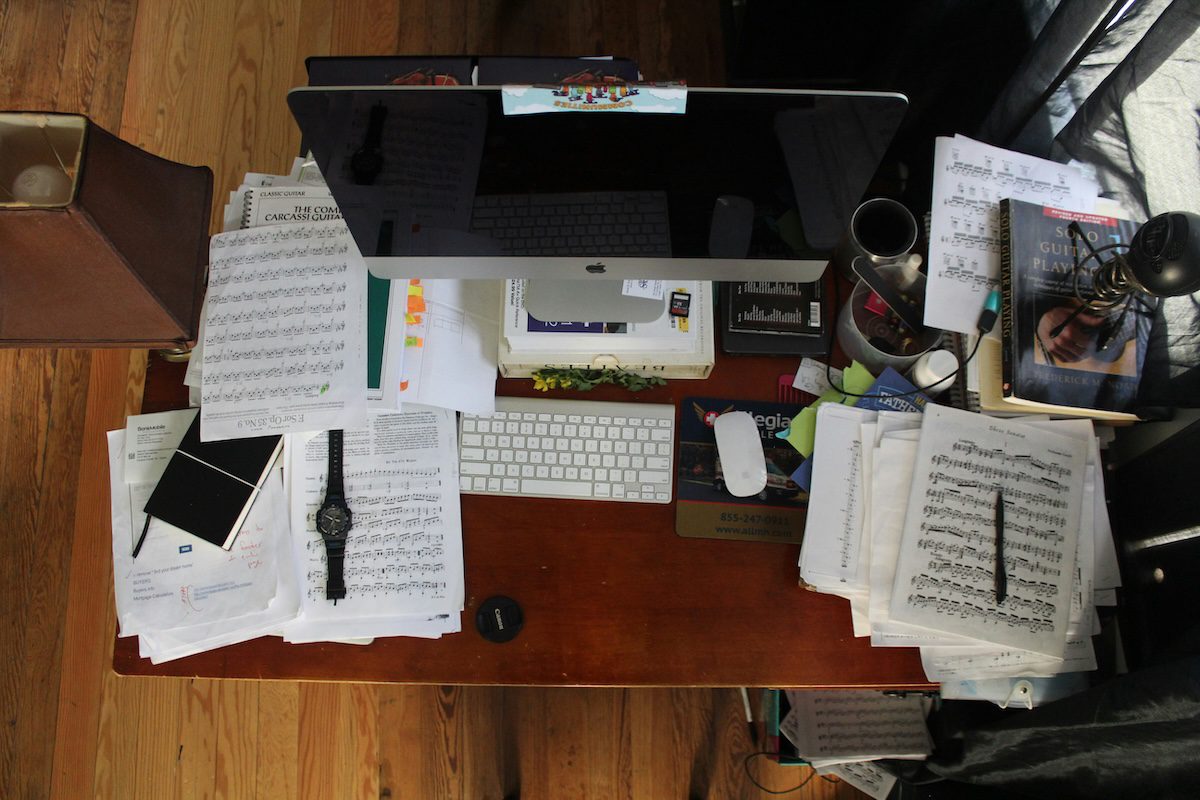
Sitting at my desk, I felt my brain start to become a tangled mess.
It was 11 a.m. on a Monday, and I was knee-deep in creating a training program for a colleague, finalizing an SOP, answering emails, and managing case entry. All the while, in the back of my mind, I was considering the overall strategy of my work program.
My attention was divided. Not split in half, but tattered into ten different pieces, growing more fragmented as the day went on. I’d start down one project or task, only to realize that in order to complete it, I had to do another.
A constant cycle of adding more “to-dos” to my list.
When Your Brain Feels Pulled in Ten Directions
By the time 5 p.m. rolled around, I felt defeated. I had been burning mental rubber all day but felt as if I had nothing to show for it.
Any productivity guru reading this will roll their eyes and say, “Of course you feel that way.”
Humans can’t multitask (okay, most of us can’t). Task-switching is possible, but our constantly divided attention slows us down. Anyone who says they can multitask really means they can give 25% to one task and 25% to another, while the remaining 50% of their brain is burned up by the energy required to shift gears.
Research shows that it takes, on average, 25 minutes to recover from an interruption and return to your original task. Think about how much time we collectively waste during the day.
When I was in the third grade, I remember getting “yelled at” by my teacher for doodling while she was lecturing. I pointed out that my classmate was doing the same thing. Her response?
“He can multitask. You can’t.”
I felt defective. Why can others multitask, but I can’t? I spent years convinced that I, too, could learn to multitask if only I tried hard enough. I wondered just how efficient I could be if I could do two things at once.
It wasn’t until I was older that I realized multitasking isn’t a badge of honor.
The Myth of Multitasking We Keep Trying to Believe
The truth is, to be really effective in our work, we have to rewire our brains. We have to reject multi-tasking as a survival mechanism.
Multitasking may seem efficient, but it actually has a negative impact on our cognitive functioning.
I made a key error that Monday because I allowed my attention to splinter. Instead of working on one project at a time, I worked on five. Worse, I responded to every ping of my Outlook inbox.
For me, this desire to do more is driven by a culture that measures us by what we produce. Lately, I’ve been feeling a bit useless at work (likely a symptom of imposter syndrome), so I’ve felt an insatiable need to produce more.
Instead of getting more accomplished, hopping from task to task made me less productive. I felt worse because nothing was truly finished.
At the end of the day, I sat back and looked at what happened. I analyzed the moments where I felt compelled to switch initiatives or answer those “burning” emails. In this reflection, I realized the real issue rested on one missing piece.
The Real Reason We Feel Unproductive
It wasn’t the fact that I was aggressively multitasking (though that certainly contributed to the anxiety that built throughout the day).
Rather, I forgot to set one priority for the day. Just one, not five.
In a world where we’re measured by our output, it’s easy to lose sight of this simple principle. To avoid getting swallowed by productivity culture, we have to stay focused on a single daily priority.
The One Thing That Will Move the Needle
How do we pick one? Think about everything you have to do in work and in life. What is one thing you can do today that will move the needle closer to your goals? Just as importantly, what are the things that don’t move you closer?
It’s just as important to consider what you shouldn’t be working on. For many of us, saying no is hard but necessary. You need to get comfortable saying no to yourself first, and then to others. This includes turning down projects or requests that pull you away from your most important work.
But I get it. Doing just one important thing a day can feel small.
Small doesn’t mean insignificant. If it’s truly that small, you can finish it first thing in the morning. Wrap it up, and then move on. When you look back on your day, instead of having five half-finished projects, you can at least say, “I completed this.”
If, every day, we picked one task that moved us closer to our goals, imagine what we could accomplish in a year. On its own, a small task may not seem like much. But when you’re intentional about where you place your energy, it’s everything.
So today, when I sit down at my work desk, I’m going to pick one thing. One priority. I’ll consider what will really move the needle and do that one thing.
I’m sure I’ll feel like an imposter at some point today. I’ll feel like maybe I’m not grinding enough. But when I close my laptop at 5 p.m., I’ll know I did something of value.
What Will Your Small Win be Today?
Today I challenge you to consider one thing you can do that will move you a tiny step closer to your goals. It doesn’t have to be big and grand. In fact, let it be small. But let it be impactful. Place all your focus on that, and get it done. Write it down, and relish in the completion.
You don’t have to do it all. No one can.
You just have to do what’s most important. The rest will fall into place.
Feeling burned out from the constant hamster wheel of work? Check out my article series on the topic: